Written by Putu Sridiniari
Independent Researcher & Curator
For nearly a century, Ubud has evolved into a dynamic aesthetic laboratory where diverse traditions, influences, and artistic tendencies meet, intersect, and shape one another. The history of art in Ubud reveals a constantly evolving field, shaped not only by encounters between local traditions and foreign influences, but also by the social, political, and economic changes surrounding it. This development has never followed a single or linear trajectory. Over time, various forces have transformed the ways artists work, perceive art, and position their practices within community life.
Long before these encounters, the people of Ubud and its surrounding areas had already developed diverse visual traditions, from wayang painting to sacred ornamentation found throughout everyday life. These practices did not simply produce objects to be viewed or exchanged; they were deeply intertwined with ritual, belief, and daily life. Through them, knowledge of form, space, colour, and composition was continuously passed down and developed—not through formal instruction, but through observation, participation, and practice across generations.
The encounter with the ideas and practices of “modern” art, often positioned as a turning point in the history of Ubud’s art, took place within the broader social and political transformations of the early twentieth century. Following the complete Dutch conquest of Bali in 1908, the colonial government promoted Bali as an exotic island through publications and the development of tourism. From the 1920s onward, increasing numbers of foreign tourists, artists, and researchers began arriving on the island. Ubud consequently developed into a meeting ground between local artists and the outside world. Within this context, the presence of Walter Spies (1895–1942) and Rudolf Bonnet (1895–1978), and their encounters with Tjokorda Gde Agung Sukawati (1910–1978) and I Gusti Nyoman Lempad (1862–1978), helped shape new conditions for the development of art in Ubud, culminating in the establishment of Pita Maha in 1936.
Within this emerging environment, significant changes took place in artistic media, techniques, and subject matter. Painters began working more freely with canvas, signing their works, and using brushes and paints that differed from those traditionally employed. Subject matter also expanded beyond epic and mythological narratives to include scenes of everyday life, flora, and fauna. The pursuit of volume, space, and depth through the interplay of light and shadow and the use of perspective further expanded the possibilities of visual expression. These developments also created greater opportunities for paintings to be produced outside ritual contexts and traditional environments. The changes, therefore, were not simply a matter of new media or techniques, but reflected a broader shift in how paintings were viewed, produced, and situated within social life.
It is important to emphasise that Ubud has never had a single artistic style. Rather, the diversity of styles that emerged here reveals both the richness of its artistic landscape and the vitality of its artists. The Ubud style tends to depict human figures and nature through a more observational and realistic approach, often within relatively harmonious compositions. Alongside it, the Batuan style developed with distinctly different characteristics: the picture plane is densely populated with figures, ornaments, and events, rendered in intricate detail with little empty space. The result is an intense visual narrative often connected to magical and cosmological realms.
The Keliki style later became known for translating visual complexity onto smaller surfaces. Meanwhile, the Young Artists movement in Penestanan, which emerged in the 1960s, expressed a sense of childlike freedom through bright colours and spontaneous, direct depictions. The Pengosekan style, meanwhile, became particularly recognised for its meticulous depictions of flora and fauna, placing sensitivity to natural forms and detail at the centre of its visual language.
By the 1980s, the movement of artists from outside Bali to Ubud and its surrounding areas had become increasingly visible, although their presence in the region had begun much earlier. For decades, Ubud had functioned as a kind of working laboratory for artists from outside Bali, who came to observe, engage, and develop their practices within an already established artistic environment. By the 1980s, however, this movement intensified and began to reshape Ubud’s art ecosystem more visibly.
In Boom! Ke Mana Seni Lukis Kita? (1990), Sanento Yuliman (1941–1992) described this phenomenon as “artistic transmigration”—the movement of artists, particularly from Java, to Ubud and its surrounding areas. Their presence brought diverse approaches, experiences, and media, further establishing Ubud as an increasingly cosmopolitan space for artistic exchange. This phenomenon reached its momentum during the painting boom of 1989–1990, when Ubud developed not only as a cultural tourism destination but also as a vibrant art market.
At the same time, the structure of Ubud’s art ecosystem began to shift. A number of major gallery owners emerged from backgrounds previously outside the art world, including former street vendors, taxi drivers, and secondary-school teachers. They subsequently became important actors in driving the economic circulation of Ubud’s art scene.
Throughout its long history, Ubud’s art ecosystem has also witnessed the emergence of spaces that opened doors for voices that were often less heard. In 1991, Mary Northmore (1949–2025), a British-born artist who lived in the Ubud area and was the wife of painter Abdul Aziz (1928–2002), together with Judith Shelley (b. 1961) and a number of women artists, established Ikatan Seniwati di Bali (ISWALI). Its nine founding members—Anastasia Muntiana Tedja (1938–2007), Cok Istri Mas Astiti (b. 1948), Ni Luh Putu Sugianitri (1949–2021), Ni Made Rinu (b. 1957), Yanuar Ernawati (1959–2014), Diany Asmina Sinung (b. 1959), Sri Supriyatini (b. 1958), Northmore, and Shelley—marked the emergence of a more organised collective of women artists within Bali’s art scene. This initiative later gave rise to Seniwati Gallery of Art by Women (1991–2013), which not only provided an exhibition space for women artists but also expanded the visibility and representation of women within Ubud’s evolving art scene.
This diversity of styles and layers of history demonstrates that art in Ubud has always been in a state of becoming—a journey that is never complete. It is not the product of a single influence, but rather the result of continuous cultural negotiation, in which each painting style becomes both a site of creativity and a form of resistance to homogenisation.
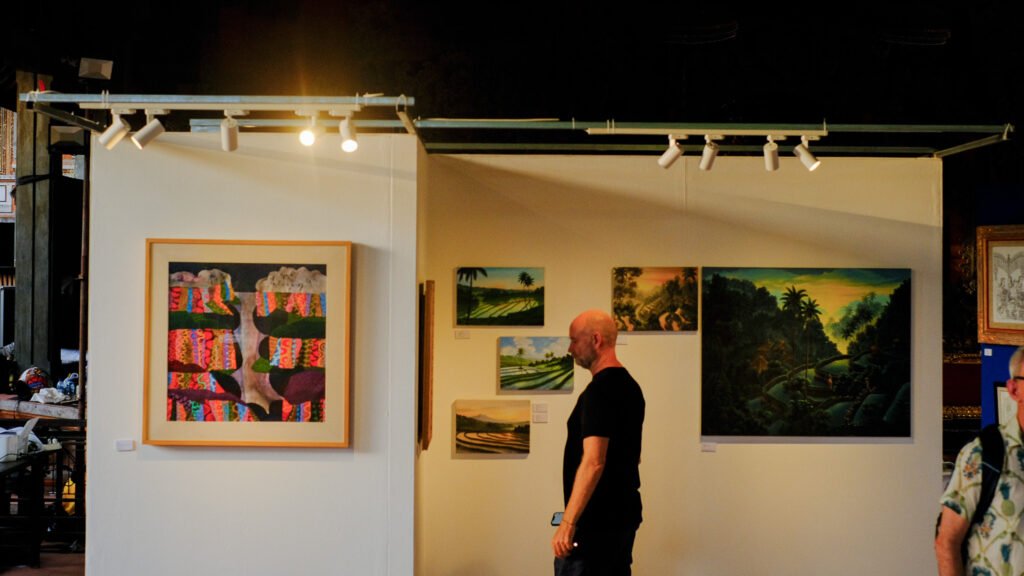
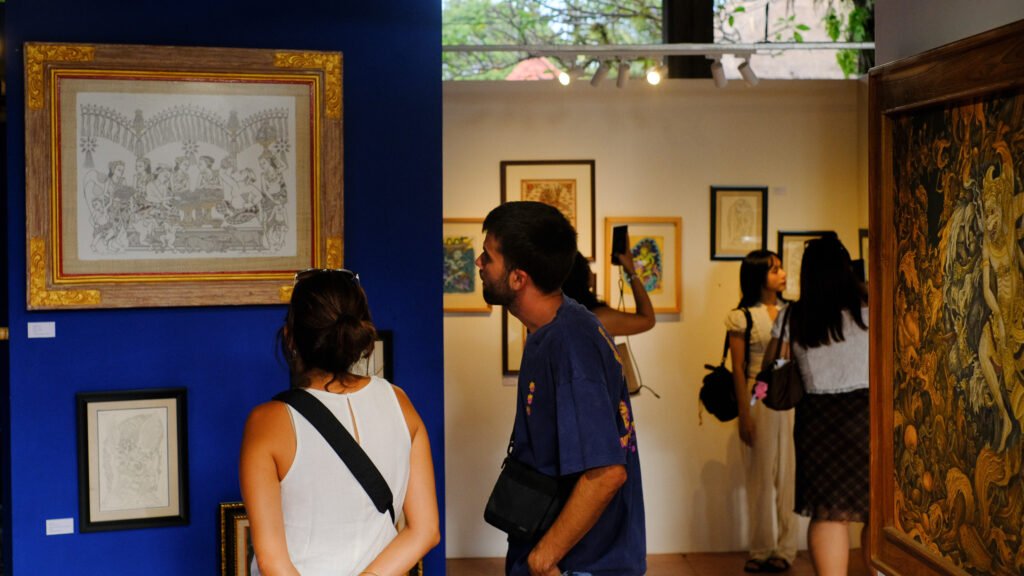
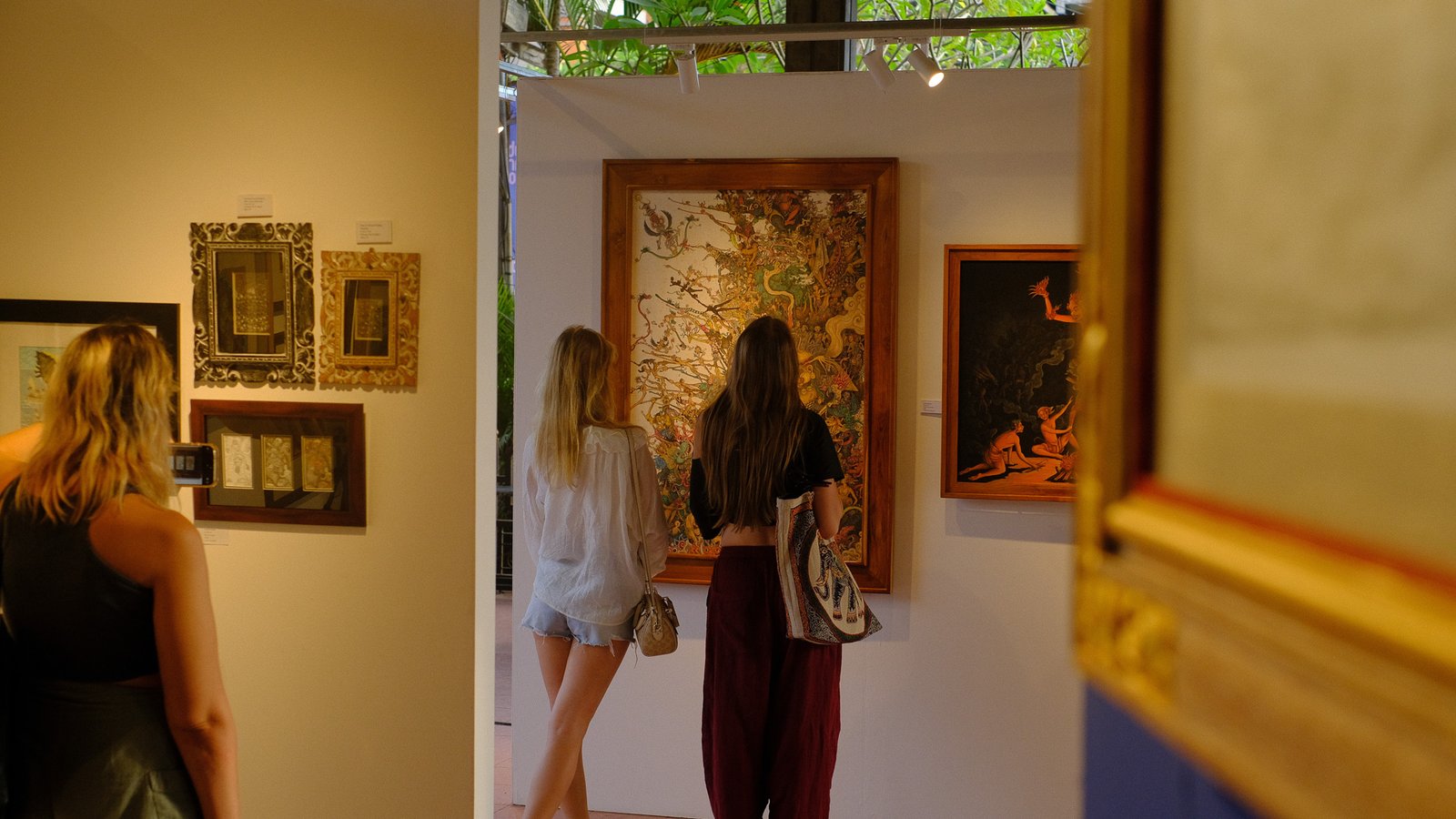
It is within this context that Ubud Art Collect takes shape. The initiative seeks to celebrate and continue Ubud’s long tradition of an open and fluid artistic ecosystem. Ubud Art Collect creates a space where the many threads of Ubud’s artistic mosaic—artists, collectors, and the public—can come together through direct conversation. More importantly, it reminds us that the story of art in Ubud has never been singular, nor should it be told from a single perspective.
“Ubud art” is not a fixed style, but a living field—continually shaped, questioned, and rewritten by each generation. In this sense, diversity is not merely a characteristic of Ubud, but one of the vital forces that has long driven the development of its artistic life.