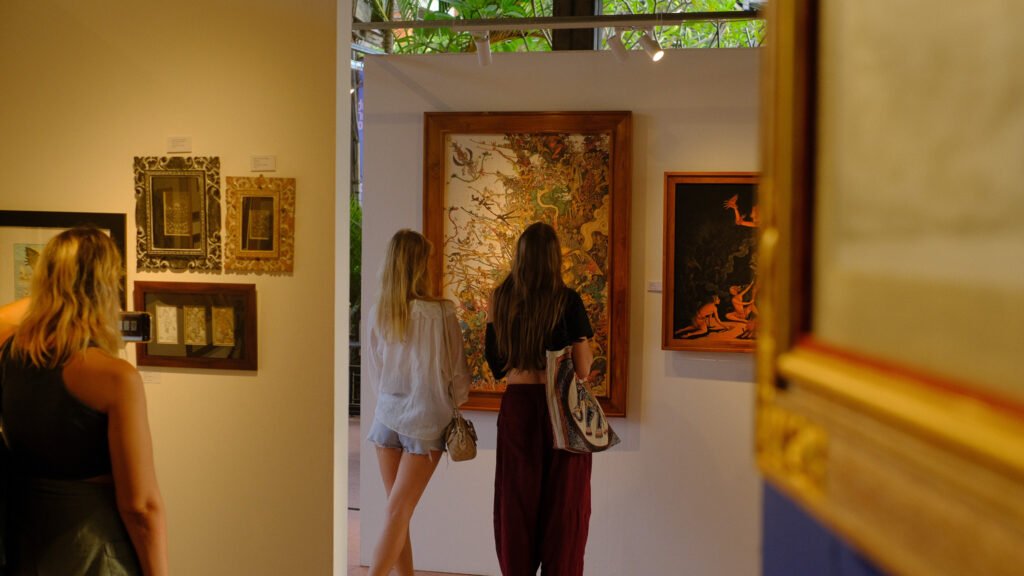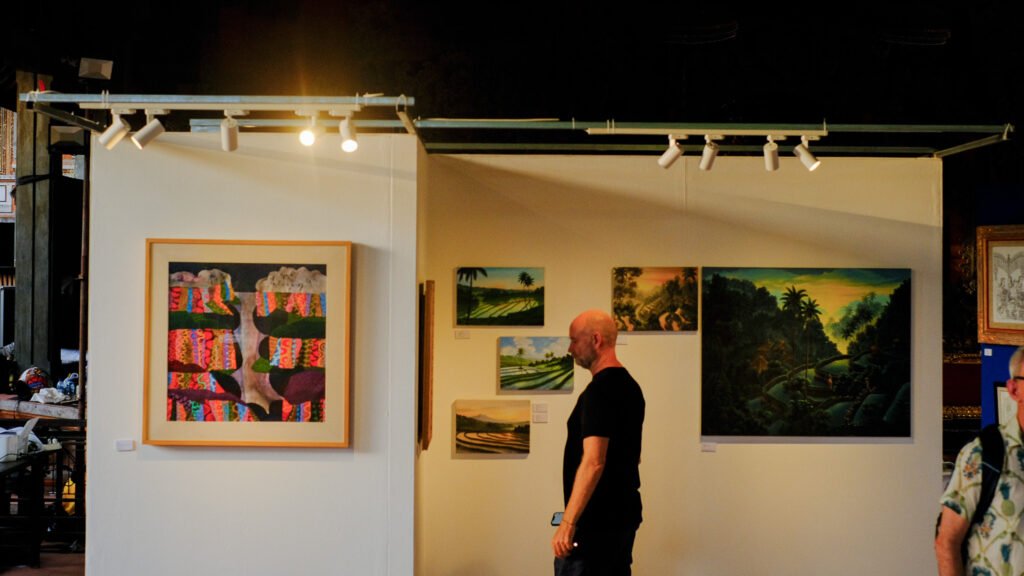
In Penestanan, Ubud, the Balinese landscape is more than a view. Terraced rice fields, coconut trees, village paths, and everyday activities have become part of a visual language passed down and developed by artists across generations. From the major changes in Balinese art in the early 20th century to the emergence of the Young Artist style in the 1960s, the ways artists have looked at and portrayed their surroundings have continued to evolve.
Its history can be traced back to the 1930s, when the presence of foreign artists such as Walter Spies brought new influences to the development of Balinese art. Together with Rudolf Bonnet and Tjokorda Gde Agung Sukawati, Walter Spies helped establish Pita Maha in 1936. The association became an important space for the development of Balinese painting, encouraging artists to expand their subjects beyond traditional stories and explore everyday life and the environments around them.
The landscape gradually took on a more prominent role. Bali’s natural environment was no longer simply a backdrop for stories, but increasingly became a subject to be observed and interpreted. Perspective, the play of light, and attention to atmosphere and space enriched the ways artists depicted their surroundings.
Several decades later, another transformation took place in Penestanan. In the early 1960s, Dutch painter Arie Smit encountered children in the village who were drawing. He invited them to learn painting, providing materials and a space to work while giving them the freedom to develop their own ways of seeing and depicting their environment.
From this process emerged the style that became known as Young Artist. Bright colours, spontaneous forms, relatively flat compositions, and depictions of everyday life became some of the characteristics that distinguished it from earlier Balinese painting styles. The Penestanan landscape, including its rice fields, trees, and rural life, began to appear through a visual language that was simpler, more decorative, and full of colour.
The movement grew rapidly. From the group of children who learned alongside Arie Smit, the number of Young Artist painters eventually grew into the hundreds. Their work circulated not only in Bali but also attracted attention beyond Indonesia. Penestanan became increasingly recognised as a village with a vibrant artistic life.
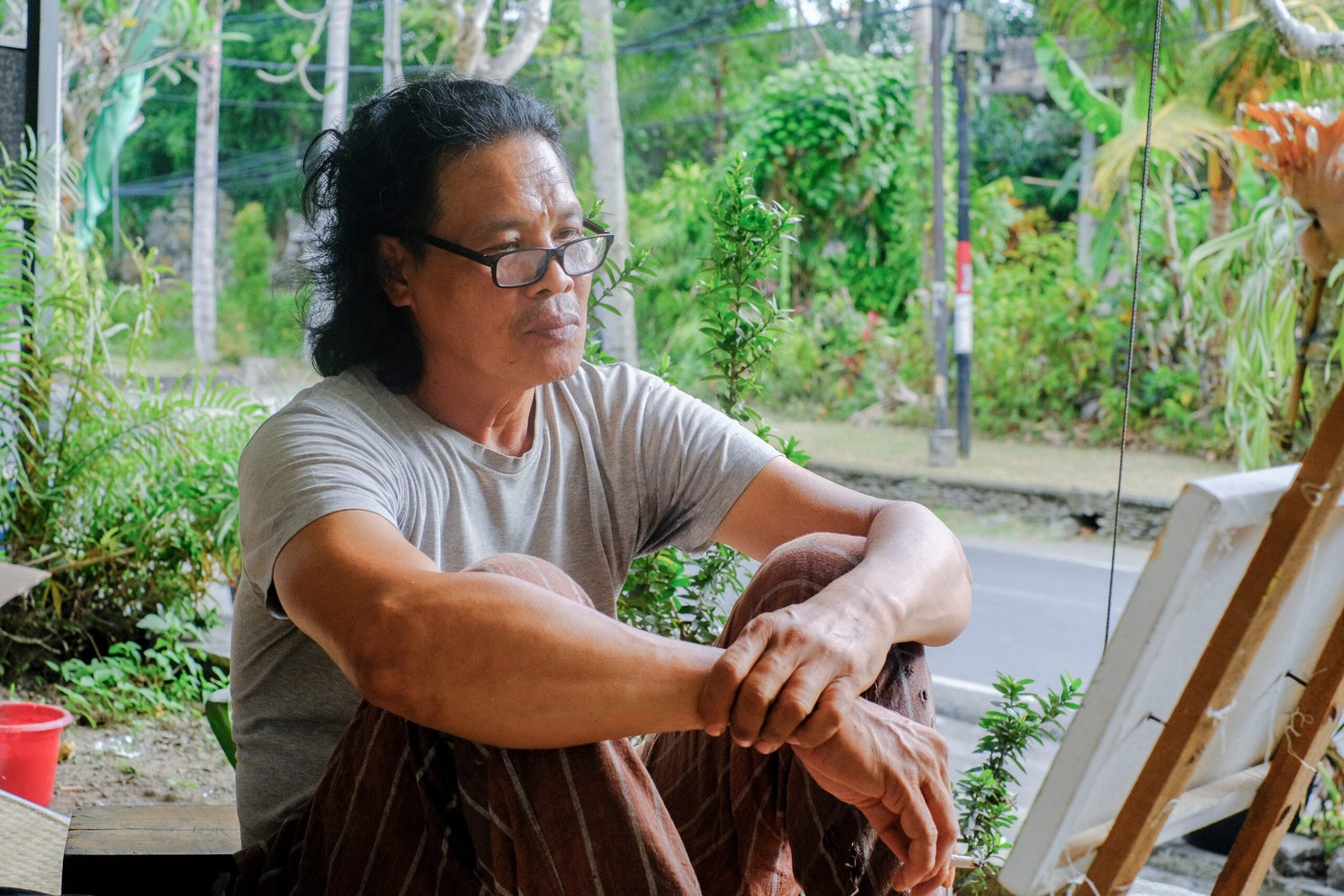
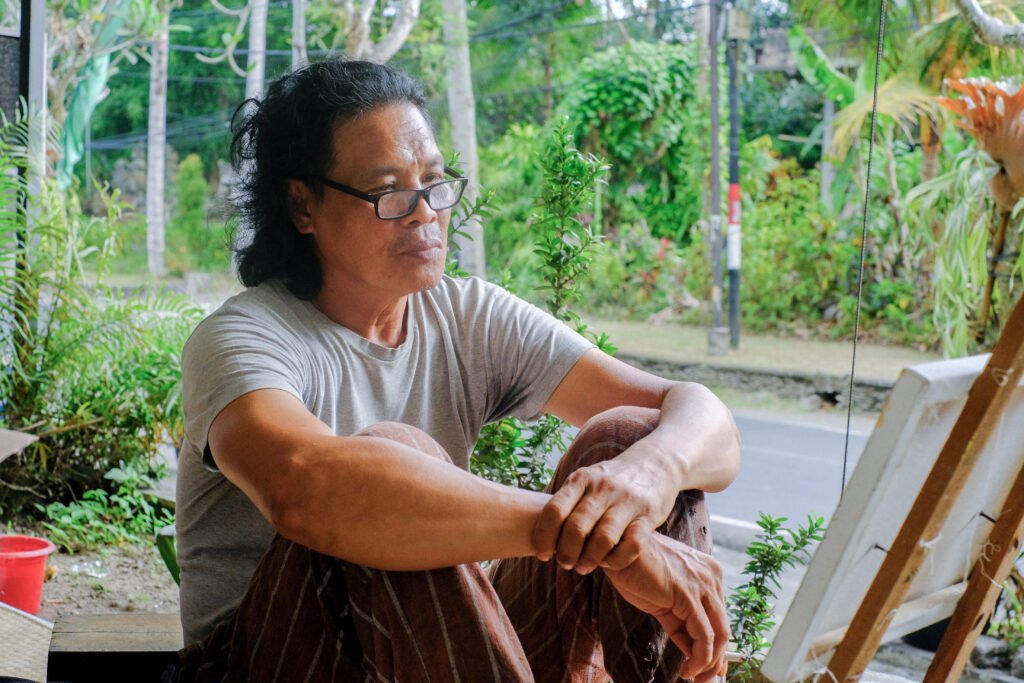
This landscape tradition was then carried forward by subsequent generations, including I Wayan Sarda, who was born in Penestanan on 11 July 1972. While the early Young Artist painters found freedom through form and colour, Sarda developed the Penestanan landscape through a more meticulous and measured approach.
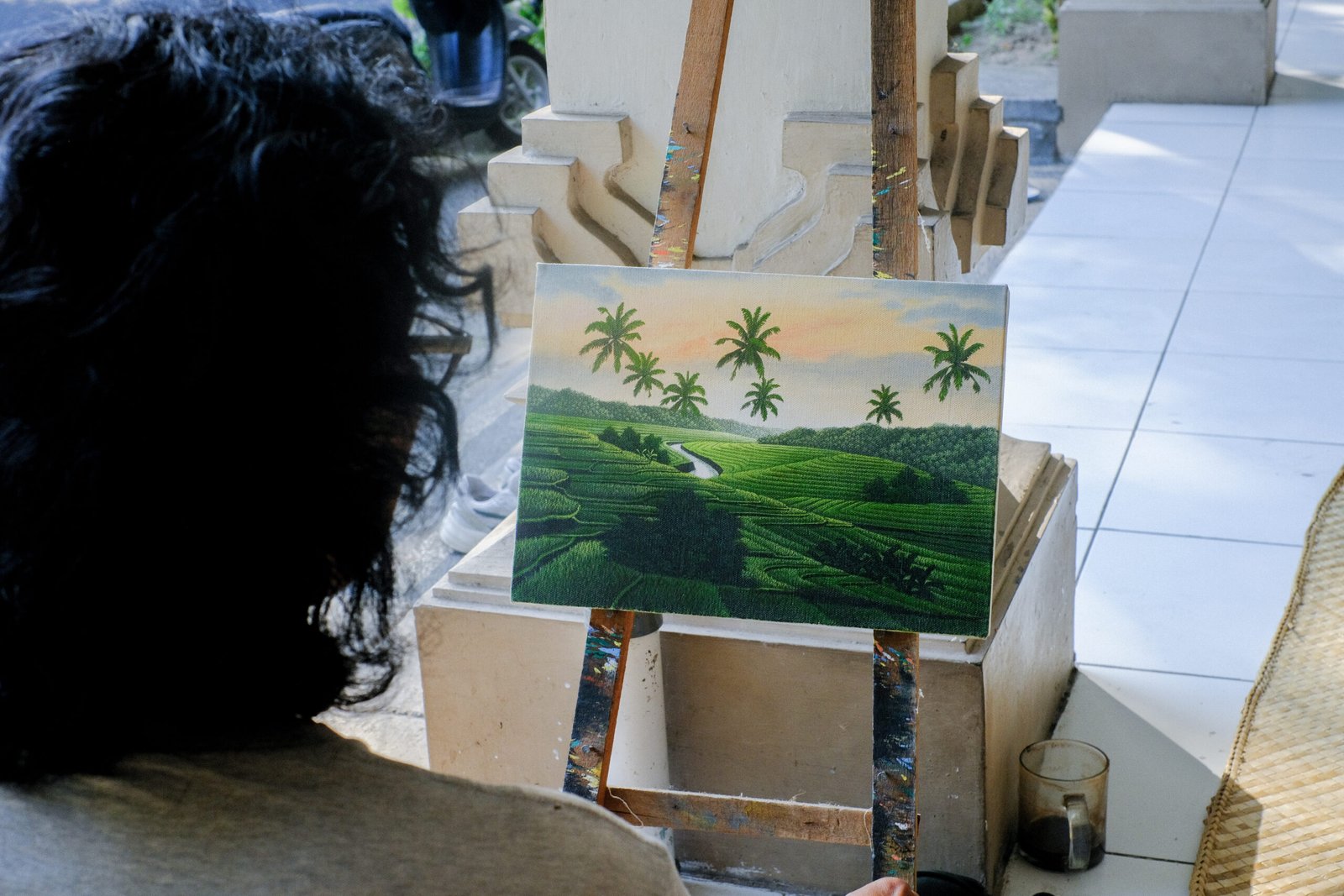
Nature remains his primary source of inspiration. Yet on canvas, Sarda pays close attention to detail and the treatment of space. Terraced rice fields, the trunks and leaves of coconut trees, reflections of the sky on the surface of the water, and subtle changes in light are rendered with a precision that has become one of the defining qualities of his work.
His landscape compositions still carry the memory of Penestanan’s artistic tradition: layered rice fields, trees filling the space, and Balinese life woven into the scenery. Yet his treatment of detail and light gives Sarda’s paintings a quieter, more realistic character. He does not abandon the visual language he inherited, but develops it through technical skill and close observation of nature.
In this context, Sarda’s work can be seen as part of the longer journey of how the Balinese landscape has been interpreted by different generations. From the influence of Walter Spies and the development of Pita Maha to the visual freedom of Young Artist, each generation has brought a new perspective to the same environment.
For Sarda, the rice fields, trees, and spaces of everyday life in Penestanan are more than beautiful subjects to paint. They are part of his daily experience and his memories of the place where he grew up. Rendered on canvas with painstaking attention, the landscape becomes a record of an environment that is constantly changing.
More than simply preserving the theme of the Balinese landscape, I Wayan Sarda’s journey demonstrates how a tradition can endure precisely because it continues to be reinterpreted. The Penestanan landscape that once became part of the development of Young Artist now finds another form through Sarda’s dedication.
From one generation to the next, what changes may be the style, technique, and way of seeing. Yet one thing remains: the desire to record a place that is part of one’s life. In Sarda’s hands, Penestanan returns to the canvas not as an image of Bali frozen in the past, but as a landscape that continues to live and change with its time.